Why didn’t Iraq fill its cabinet seats?
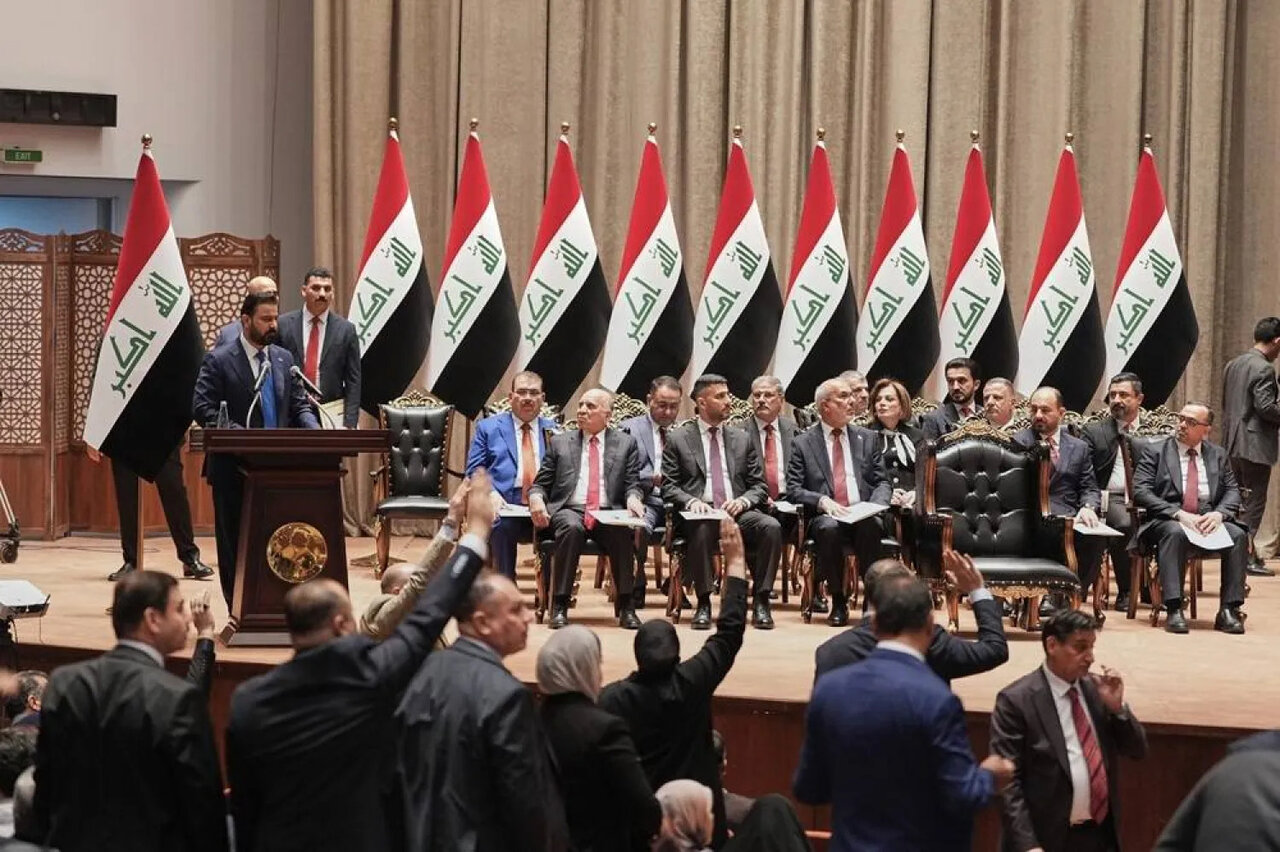
TEHRAN – On Thursday, Iraq’s parliament approved only part of Prime Minister Ali al-Zaidi’s new cabinet. More than half the posts were confirmed, enough to legally seat the government.
But critical positions remain empty. Nominees for Interior Minister, Higher Education Minister, and Planning Minister failed to win approval. Voting on six other posts, including Defense, Labor, Housing, and Education Ministers, was postponed indefinitely. The result is a government that meets the legal threshold but cannot fully secure or govern the country.
Parliament has scheduled the next vote to fill these vacancies after the Eid al-Adha holiday, which begins in late May of this year and may result in further delays. Until then, Iraq’s security and economic future remain in a state of incompleteness.
The reported reason for the delay is a dispute among Iraq’s ruling Coordination Framework over candidate selection. But critics across the political spectrum point to a deeper, more troubling cause: the United States, 23 years after invading Iraq, continues to hold the country’s financial sovereignty hostage and is using that leverage to veto ministers it does not like. The fact that the government meets the legal threshold is cold comfort when the missing seats control the nation’s police force and national army.
Widely believed to be at the heart of the current deadlock is the Popular Mobilization Forces, PMF, which was formally recognized by the Iraqi parliament as a state institution a decade ago. Its soldiers receive state salaries. Its commanders report to the Prime Minister. And, in the parliamentary elections held late last year, the political wings of PMF factions fielded candidates, campaigned, and won a record number of seats. They were democratically elected by Iraqi voters at the ballot boxes.
The fact that the U.S. has spent more than a year threatening Iraq with economic consequences if the legally eligible PMF, which democratically won parliamentary seats, takes them and runs for government positions is troubling for Washington. Where, then, is Iraq’s sovereignty?
While all vacancies are problematic, the absence of permanent interior and defense leaders, no matter who takes these posts, is particularly dangerous. These are not ordinary ministries. They control the army, police, counterterrorism forces, and border security. Iraq still faces periodic attacks by Daesh sleeper cells and recently saw U.S.-Israeli air raids.
Border tensions with Syria, where the PMF is also operating extensively, require coordinated military and diplomatic responses that a caretaker government cannot provide. Without a defense minister, the army cannot authorize major military operations or implement long-term security reforms. Without an interior minister, police reforms stall, and the government cannot make any credible commitments.
The reason these seats remain empty is due to American pressure. Since the 2003 invasion, Iraq’s oil revenue has been deposited not in Baghdad, but in an account for the Central Bank of Iraq at the Federal Reserve Bank of New York. The legal owner of the money is Iraq. But physical custody, and therefore operational control, lies in Washington.
Every month, the U.S. Treasury approves or delays dollar shipments based on Iraqi requests. This system was imposed by the U.S. after the invasion and has never been dismantled. The Federal Reserve annually ships billions of dollars in physical cash to Baghdad to sustain Iraq’s dollar-dependent economy. That cash is Iraq’s money. But America holds the keys.
In late April of this year, the U.S. demonstrated exactly how that leverage works. Washington suspended a cash shipment to Baghdad and halted security cooperation, using the pause to pressure Iraq over groups with alleged links to Iran. The message was unmistakable: comply with American demands, or lose access to your own funds.
The influence remains explicit. According to reports from the parliamentary session, the gridlock was aggravated by strict diplomatic warnings from the United States stating that Washington would refuse to cooperate with Baghdad if prominent security positions were handed to politicians affiliated with groups that the U.S. alleges have links to Iran.
The U.S. has effectively given itself a veto over Iraq’s most sensitive ministerial appointments based on unproven allegations. And while the cash is flowing again today, the threat of another freeze is always there, ready to be deployed if Washington dislikes the final cabinet lineup.
Under any normal definition of sovereignty, those elected representatives have the right to nominate ministers for the cabinet, including for the interior or defense portfolios. But the U.S. has declared that any candidate with alleged ties to Iran is unacceptable. Washington has not provided evidence proven in an Iraqi court of law. It has simply exercised its financial and diplomatic veto based on allegations.
America frames its pressure as necessary to counter Iranian influence. But this framing ignores a basic geographic fact: Iran is Iraq’s neighbor. The two countries share a long border. They trade goods, exchange tourists, and share religious symbols. When Iraq’s army collapsed against Daesh, Iran was the first to send military advisors and humanitarian aid. Millions of Iranian pilgrims travel to the holy cities of Najaf and Karbala in Iraq. Iraqi pilgrims visit holy shrines in Qom and Mashhad inside Iran en masse as well.
This is not a strategic alliance born of ideology. It is the reality of being neighbors. The United States, by contrast, came from across the world. 250,000 American troops invaded, remained for nearly a decade, returned in smaller numbers to allegedly fight Daesh, and still maintain an illegal military presence.
Washington demands that Iraq choose between America or its Iranian neighbor, a false choice that has paralyzed Iraqi politics for two decades. “Iran is our neighbor. We have to live with them forever” said one Baghdad political analyst, speaking on condition of anonymity. “America can leave tomorrow. Why do they expect us to treat both the same?”
The Federal Reserve mechanism was never designed to serve Iraqi sovereignty. It was designed to give the United States a permanent lever. Consider the absurdity: every month, physical U.S. dollars are printed in America, loaded onto cargo planes, and flown to Baghdad based on receipts approved by U.S. officials. Iraqi merchants, banks, and citizens then use those dollars to conduct daily business. If Washington decides the receipts are insufficient, or that Iraqi political appointments are unsatisfactory, the shipments stop. The Iraqi dinar weakens. Inflation rises. The government scrambles.
This is not financial management. This is financial occupation. Critics argue that the solution is simple: transfer control of Iraq’s oil revenue to the Central Bank of Iraq. End the monthly ritual of flying in cash. Allow Baghdad to manage its own finances, pay its own bills, and select its own ministers without fear that the account will be frozen. The technology exists. The legal framework exists. The only missing ingredient is American willingness to let go.
The irony is bitter. The U.S. further justifies its financial control as a tool to combat corruption by politicians with alleged links to Iran. No evidence has been presented.
Yet it doesn’t apply the same scrutiny to its own allies in Iraq. Kurdish parties, have been controlling illegal oil smuggling routes through Turkey. Despite evidence published by Baghdad no dollar shipments were halted. Some Sunni political leaders took kickbacks on defense contracts and financed violence but faced no U.S. financial penalty. The message is clear: the U.S. is not fighting corruption. It is fighting Iran, or rather, fighting anyone it alleges has ties with Iran.
23 years is long enough. The U.S. has a choice. It can continue the current policy, maintaining financial control, vetoing elected ministers based on unproven allegations, demanding that Iraq treat its neighbor as an enemy, and watch as the government remains paralyzed, security deteriorates, and resentment grows. Or it can leave and transfer control of Iraq’s oil revenue to the Central Bank in Baghdad. Respect the results of Iraqi elections, even when Washington dislikes the winners. The Iraqi people, who have survived dictatorship, invasion, civil war, and Daesh can manage their own affairs.
The next vote is coming. But the real question is not who will fill the empty seats. The real question is: will America ever let Iraq sit in its own chair?
Leave a Comment